
The Future of Urea Manufacturing
Ageing Plants, Technology Upgradation, Industry 5.0 and the Race for Cost Competitive Low Carbon Urea
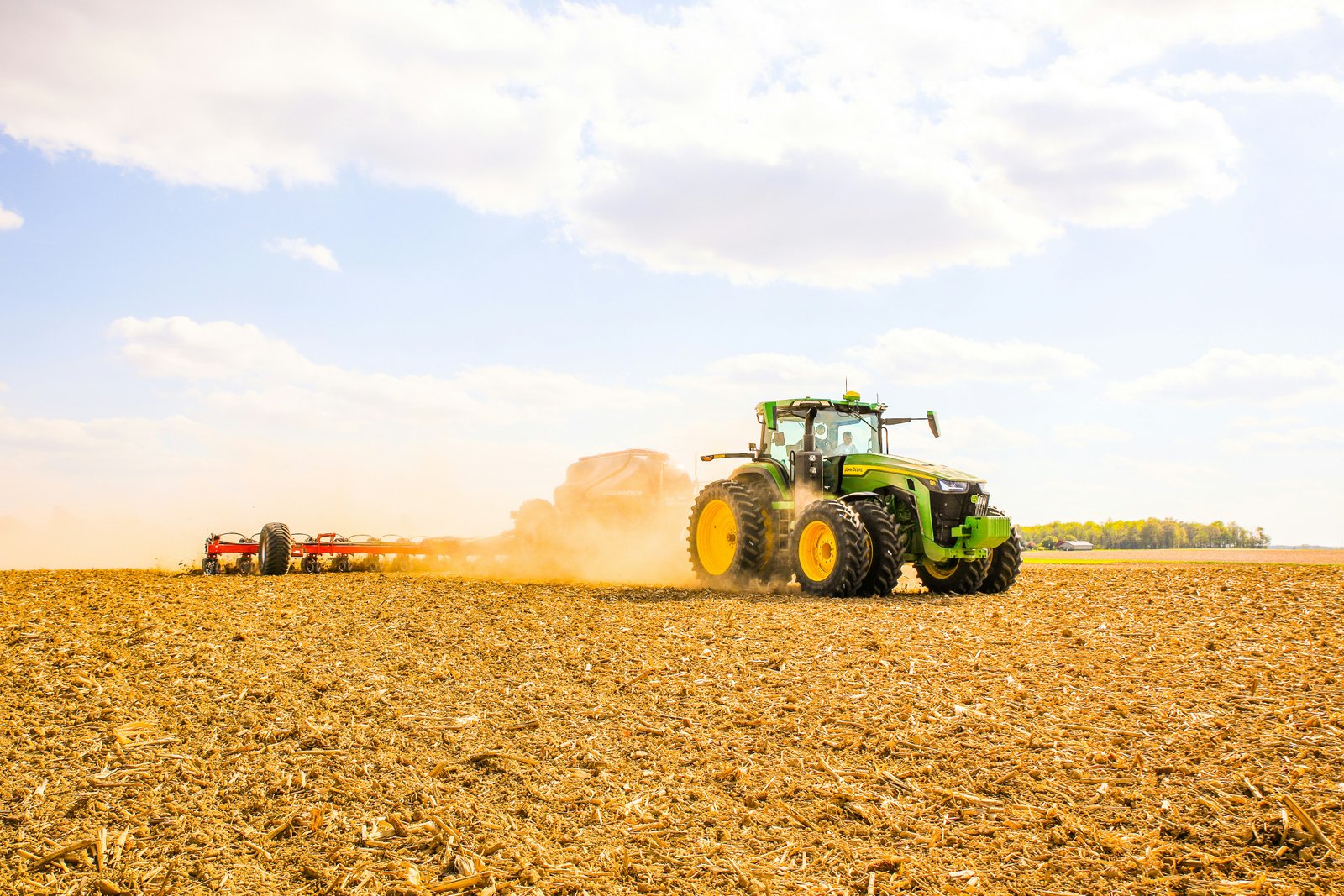
Urea sits at the centre of global nitrogen fertiliser supply, and a growing share of the world's capacity is running on ageing infrastructure. For producers, the question is shifting from how long a plant can keep operating to which pathway gives it the most competitive remaining economic life.
A global perspective for fertilizer producers, ammonia/urea technology companies, energy companies, investors, policymakers and industrial technology providers.
Ageing infrastructure is becoming a competitiveness issue, not just an asset-life issue – but age alone does not determine whether a plant is competitive.
When production cost moves toward import parity, technology becomes a strategic decision, and the lowest-capex option is not necessarily the lowest-cost strategic option.
Industry 5.0 can amplify a good asset, but it cannot indefinitely compensate for fundamental hardware constraints.
Decarbonisation is moving from an ESG objective to a competitiveness variable, and no single pathway – grey, blue or green – is universally optimal.
The future winner will integrate efficient process technology, digital intelligence, low-carbon energy and people, rather than optimising any one dimension in isolation.
Ageing infrastructure is becoming a competitiveness issue – not just an asset life issue
Urea sits at the centre of global nitrogen fertiliser supply, while its upstream ammonia production is among the most energy intensive large-scale chemical processes. Conventional production remains closely linked to natural gas and, in some markets, coal. At the same time, low carbon hydrogen, carbon capture and renewable electricity are creating new routes to lower emission production. The result is a widening strategic gap between plants that can continuously improve their efficiency and plants constrained by legacy equipment.
Public industry analysis indicates a substantial spread between average and best available ammonia energy performance – broadly from the high-20s to around 40 GJ per tonne depending on technology and plant configuration. This gap matters because energy is a major component of variable production cost. As equipment ages, the challenge can extend beyond energy intensity to maintenance burden, reliability, turnaround requirements and the ability to integrate newer process controls.
Age alone does not determine whether a plant is competitive. A relatively old plant can remain viable where feedstock is advantaged, utilisation is high and modernisation has been sustained. Conversely, a newer plant can face pressure when feedstock or power costs are structurally high. The strategic issue is therefore the interaction between asset condition, operating economics, technology and the local energy system.
The question is no longer simply “How long can an ageing plant operate?” It is “What is the most competitive pathway for the plant's remaining economic life?”
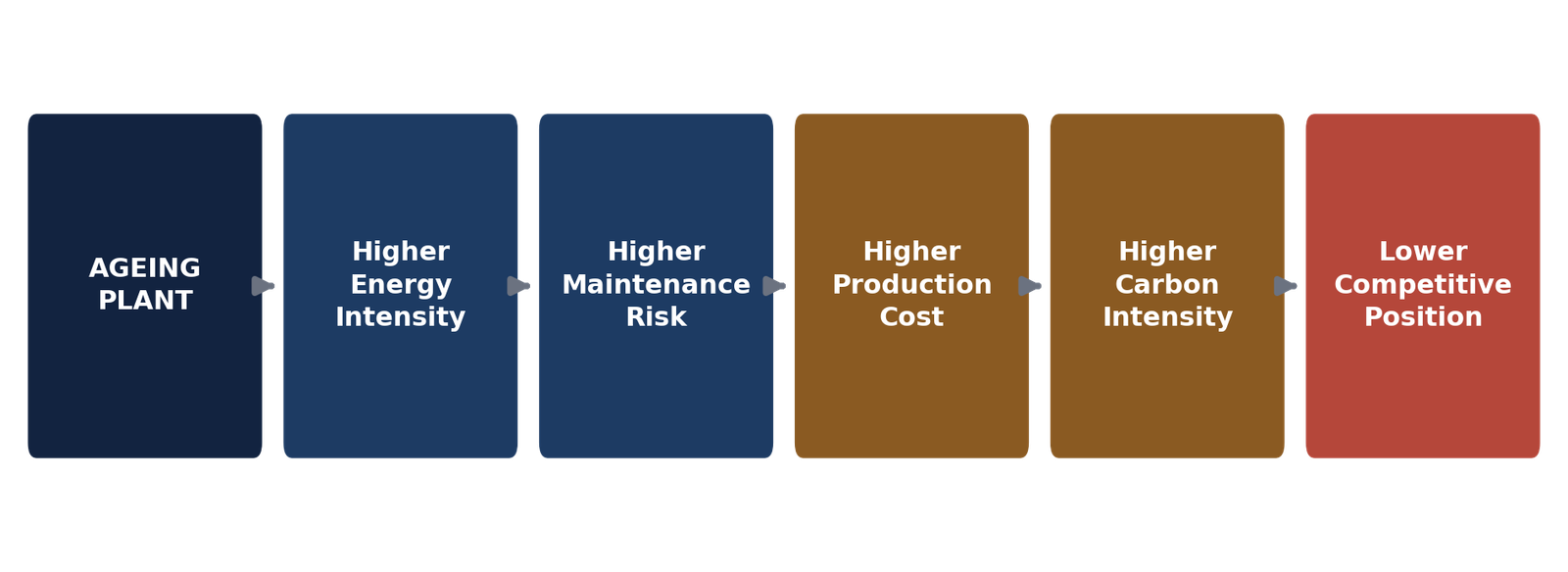
Exhibit 1. Conceptual illustration of the ageing asset cascade. Directional relationship only – not a quantified industry benchmark.
When production cost moves toward import parity, technology becomes a strategic decision
Urea competitiveness is shaped by feedstock and electricity prices, plant efficiency, scale, utilisation, maintenance, technology configuration, logistics, financing and in import dependent markets – the relevant import parity or CIF benchmark. A useful decision lens is to classify plants as competitive, vulnerable or structurally challenged based on the relationship between sustainable production cost and the delivered alternative.
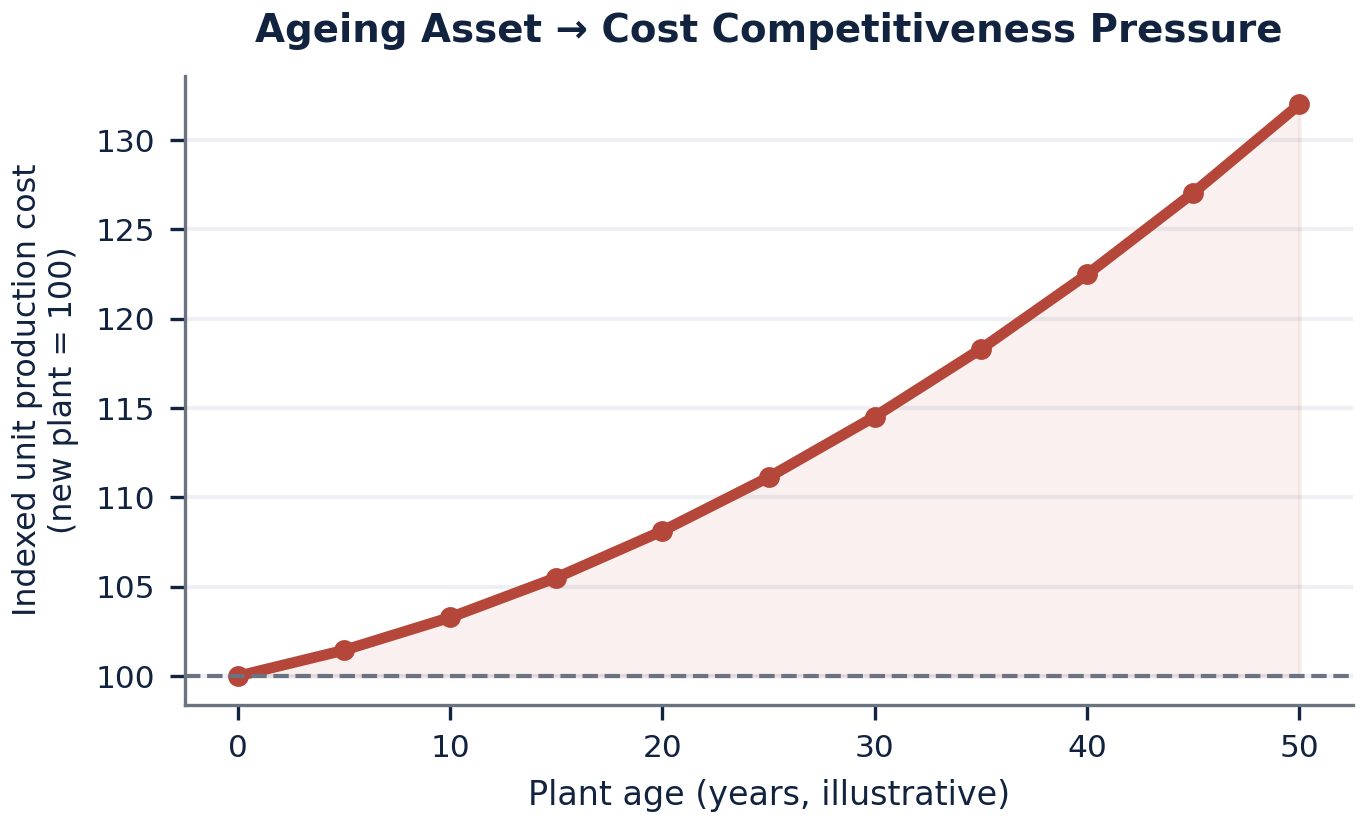
Exhibit 2. Data shown is sample and illustrative and is intended to demonstrate the analytical framework, not to represent a market forecast or company specific benchmark. Indexed values are illustrative.
The lowest capex option is not necessarily the lowest cost strategic option
Ageing plants typically face a portfolio of choices rather than a single modernisation decision. The appropriate pathway depends on remaining asset life, current cost position, core equipment condition, site infrastructure, access to carbon management systems, financing capacity and the expected evolution of energy and carbon economics.
Table 1. Strategic Options for an Ageing Urea Plant.
The strategic decision should be evaluated on total lifecycle economics rather than initial capex alone. A lower capital refurbishment can be attractive if the asset has sufficient remaining life and a credible route to improved efficiency. Where the underlying process configuration is fundamentally constrained, repeated maintenance can instead lock capital into a declining asset.
The next generation of urea plants will be intelligent, predictive and human-centric
Industry 5.0 is best understood in the plant environment as the convergence of advanced process technology, connected data, artificial intelligence and human expertise. The objective is not simply more automation. It is better decision making, greater resilience and the ability to optimise cost, energy, reliability and emissions simultaneously.

Exhibit 3. The evolution from Urea 3.0 to Urea 5.0.
In ammonia and urea operations, practical applications include advanced process control, AI assisted optimisation, predictive maintenance, digital twins, real-time energy management, compressor and turbine optimisation, heat integration analysis, early detection of process deviations, intelligent turnaround planning, remote monitoring and operator decision support tools.
Industry 5.0 is not a substitute for obsolete process technology. Digital intelligence can amplify a good asset; it cannot indefinitely compensate for fundamental hardware constraints.
Table 2. From Urea 3.0 to Urea 5.0.
Decarbonisation is moving from an ESG objective to a competitiveness variable
Ammonia production has a large direct and indirect emissions footprint, with coal-based production generally more carbon intensive than efficient natural gas-based routes. This makes decarbonisation both an environmental and an economic question. Producers are increasingly evaluating a spectrum of options: energy efficiency improvements, electrification where practical, carbon capture, low carbon hydrogen, renewable electricity and green ammonia/urea.
No single pathway is universally optimal. Relative economics depend on natural gas and power prices, renewable resource quality, electrolyser and carbon capture costs, CO₂ availability and infrastructure, financing conditions, plant age, remaining asset life, policy support and technology maturity. The same technology can therefore have very different economics in different regions.
Europe's 2022 gas shock provides a clear illustration of this sensitivity. Public European sources reported that exceptionally high gas prices sharply increased ammonia production costs and contributed to substantial production curtailment. The episode demonstrated how quickly a feedstock shock can turn energy efficiency and supply security into strategic competitiveness issues.
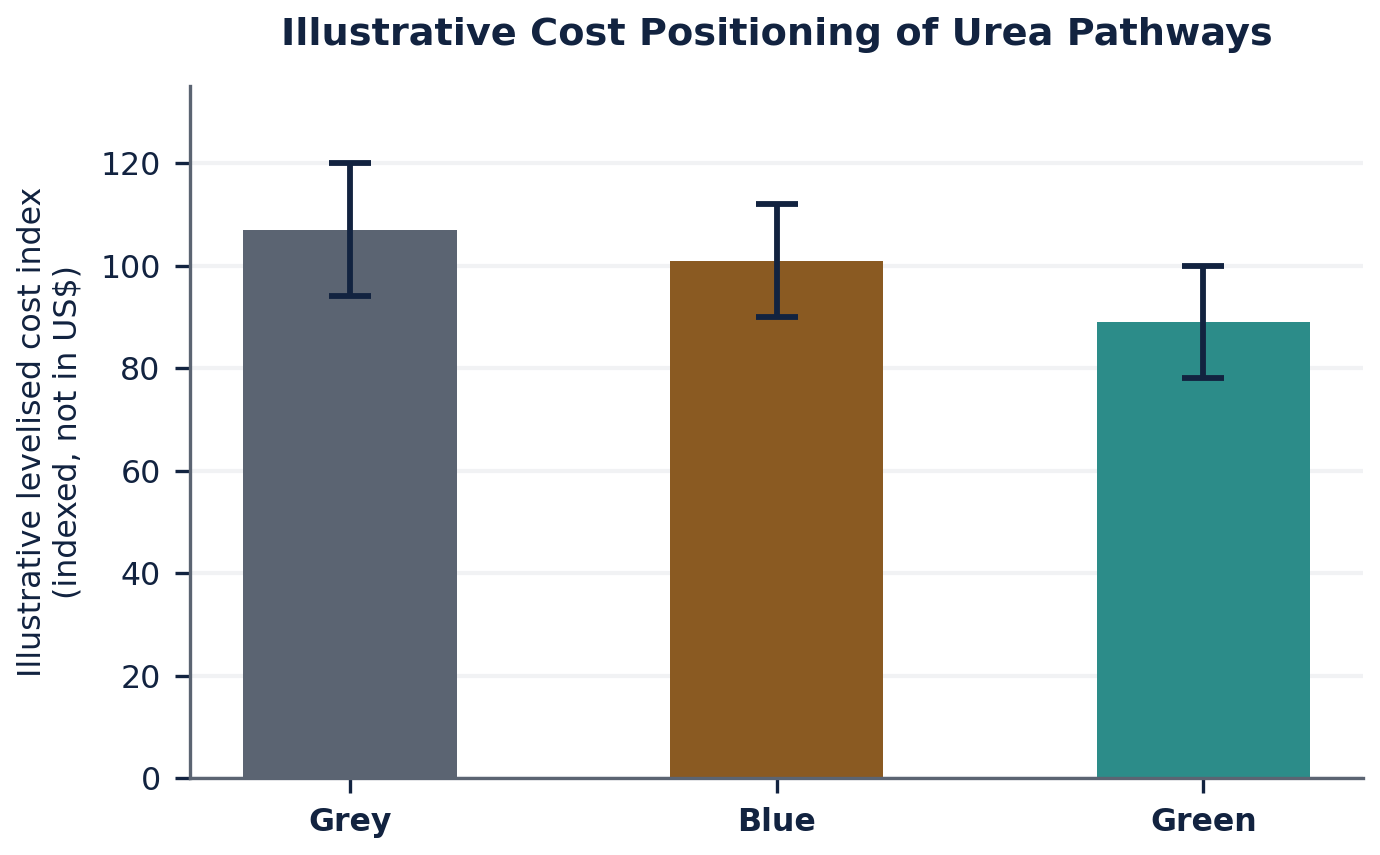
Exhibit 4. Data shown is sample and illustrative. The ranges are intended to demonstrate relative pathway economics, not forecast actual urea costs. Actual economics vary by geography, technology, energy prices, financing and policy.
The directional pattern shown above – Grey Urea sitting above Green Urea on a levelized cost basis – reflects a few recurring cost drivers rather than a fixed rule. Grey Urea's cost base is anchored to natural gas or coal feedstock, which exposes it to feedstock price volatility and, increasingly, to the cost of carbon regulation as policy tightens. Blue Urea reduces that carbon exposure through carbon capture, but adds meaningful capital and operating cost, so its relative position depends heavily on CO₂ capture and storage economics. Green Urea carries no fossil feedstock cost once built, and in favourable locations benefits from renewable electricity and electrolyser costs that have been declining for reasons unrelated to gas markets; over a long asset life, that combination can leave it comparatively less exposed to feedstock inflation and carbon cost than Grey. Where natural gas remains cheap, carbon is lightly priced and renewable resources are less favourable, this ordering can reverse, and Grey or Blue Urea can remain the lower cost options for an extended period.
Technology maturity does not move in lockstep with decarbonisation potential
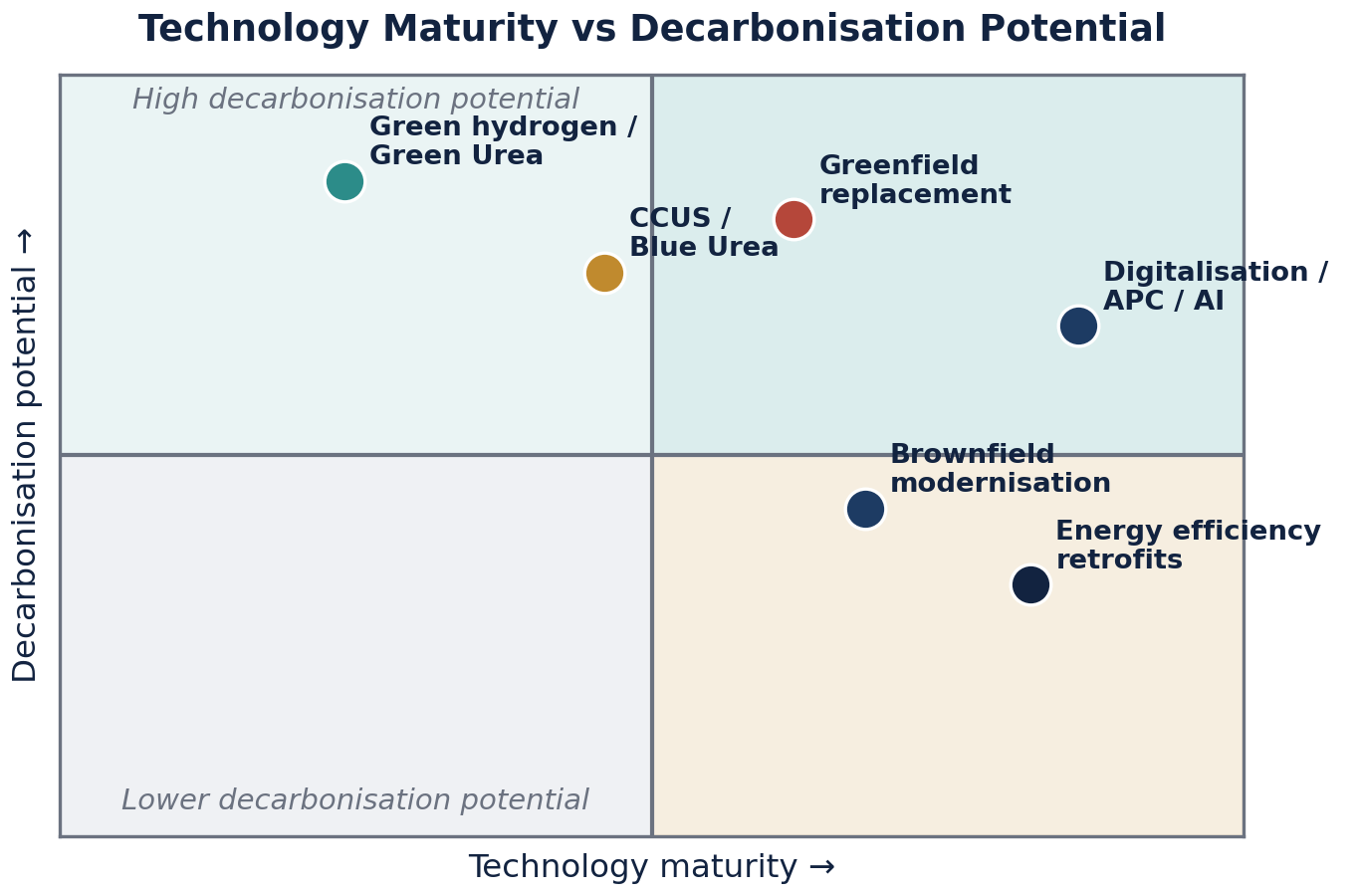
Exhibit 5. Indicative positioning only. This is a qualitative framework, not a quantified technology ranking or investment recommendation.
The right pathway is location specific: brownfield options can preserve valuable infrastructure, while greenfield projects can reset the technology baseline.
The future winner will not simply be the plant with the lowest energy cost
The competitive plant of the next decade is likely to combine four reinforcing layers: high efficiency process technology, digital intelligence, low carbon energy and feedstock, and human and operational excellence. None is sufficient on its own. Efficient hardware without optimisation leaves value unrealised; digitalisation without a sound physical asset has limits; low carbon technology without reliable operations can undermine economics.
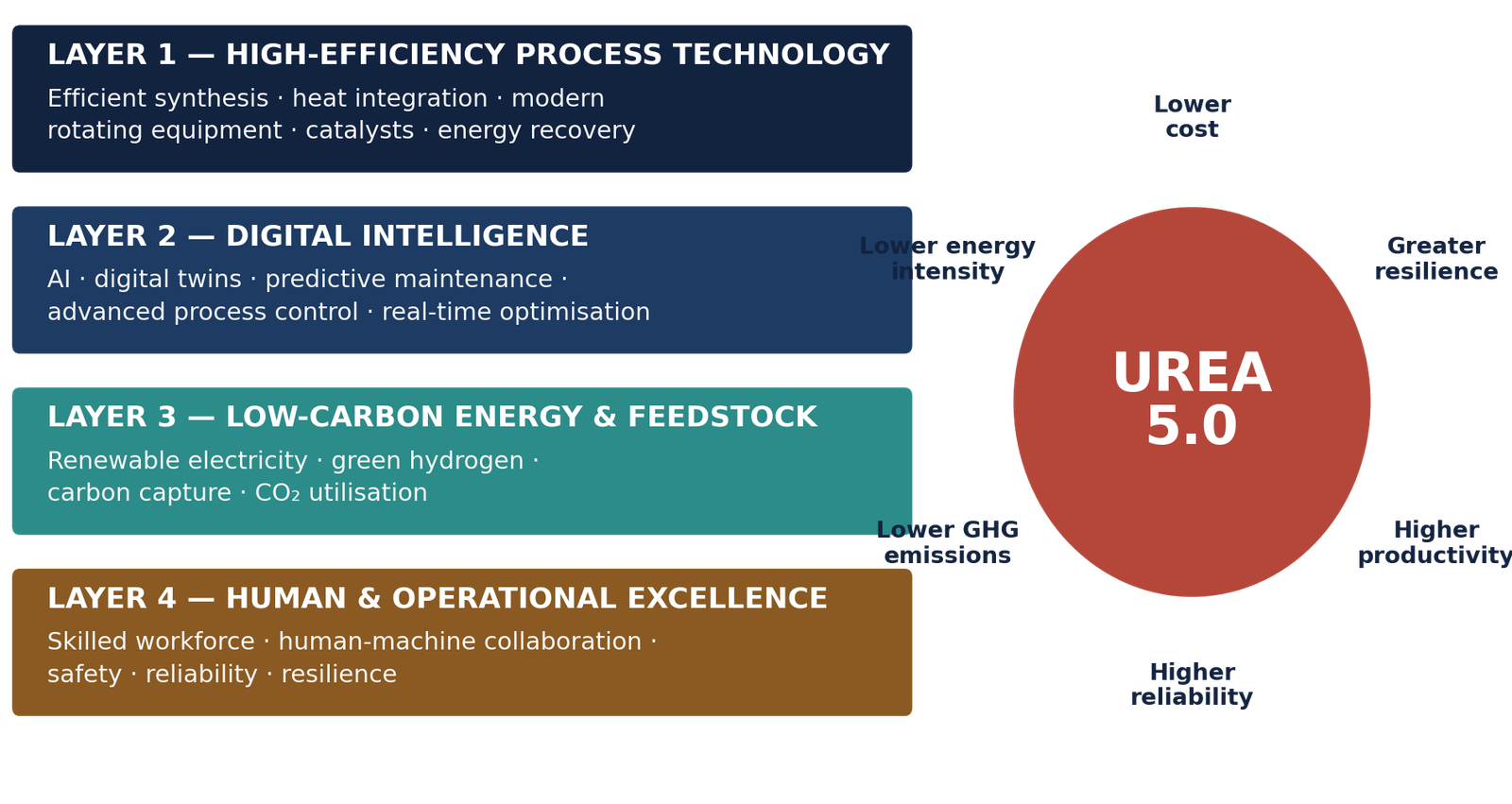
Exhibit 6. Conceptual framework. The relative contribution of each layer to cost, emissions, productivity and reliability varies by plant, technology and geography.
The global urea industry is moving toward an asset renewal and technology transformation cycle. Ageing infrastructure is increasingly a question of cost competitiveness, energy performance, reliability, emissions and capital allocation – not simply remaining mechanical life. Producers will need to assess whether to maintain, upgrade, digitalise, decarbonise, repurpose or replace individual assets based on their specific economics.
The defining feature of the next generation of production will be convergence. High efficiency process technology will provide the physical foundation. Digital systems and AI will improve visibility and decision-making. Low carbon energy and feedstocks will reshape the emissions profile. Human expertise will remain central to safe, resilient and adaptive operations. Together, these capabilities create the concept of “Urea 5.0”: a production system designed to compete on cost, energy, carbon, reliability and resilience at the same time.
From ageing assets to Urea 5.0: the competitive advantage will come from integrating technology, digital intelligence, low carbon energy and people – not from optimising any one dimension in isolation.
International Energy Agency. (2021). Ammonia Technology Roadmap. Ammonia energy use, emissions and technology pathways.
International Renewable Energy Agency. (2020). Green Hydrogen Cost Reduction. Electrolyser cost and green hydrogen economics.
European Commission / EUR-Lex. (2022). Fertiliser sector communications. European gas price and fertiliser market disruption context.
Yara International. (2022). Public corporate communications. European ammonia production and utilisation response to the gas price shock.
Fertilizers Europe. Public market and industry publications. European fertiliser industry context.
Turning Market Uncertainty into Better Fertilizer Decisions
Fertilizer markets are shaped by feedstock costs, production economics, capacity changes, trade flows, seasonality, policy and global supply demand dynamics. ESIQ's fertilizer analytics and market intelligence capabilities are designed to help industry participants interpret these dynamics, assess price trends and scenarios, and support more informed decisions across procurement, capacity planning, technology investment and decarbonisation strategy.
Procurement
Price trends and scenarios to support more informed fertilizer purchasing decisions.
Capacity planning
Interpreting capacity changes, trade flows and supply-demand dynamics.
Technology investment
Assessing production economics across modernisation, digitalisation and replacement pathways.
Decarbonisation strategy
Comparing grey, blue and green pathways against feedstock, policy and carbon-cost scenarios.
Planning your plant's next economic life?
ESIQ helps fertilizer producers, technology providers and investors interpret market dynamics and support decisions across procurement, capacity planning, technology investment and decarbonisation.
Continue the research
From Ambition to Market Reality: Where Could India's Green Hydrogen Opportunity Emerge?
A scenario-based view of India's green hydrogen opportunity across demand, supply, sector adoption and the emerging market gap.
Read More →
Cement Decarbonisation & Green Cement Solutions
The levers, technologies and economics reshaping one of the world's hardest-to-abate industrial sectors - and the commercial case for low-carbon construction.
Read More →
Biofuels & Sustainable Fuels
Enabling the transition to low-carbon mobility - the feedstocks, fuels, technologies, policy and economics decarbonising aviation, shipping and heavy transport.
Read More →